
Class 4 Worksheet on Comparative Superlative Adverbs

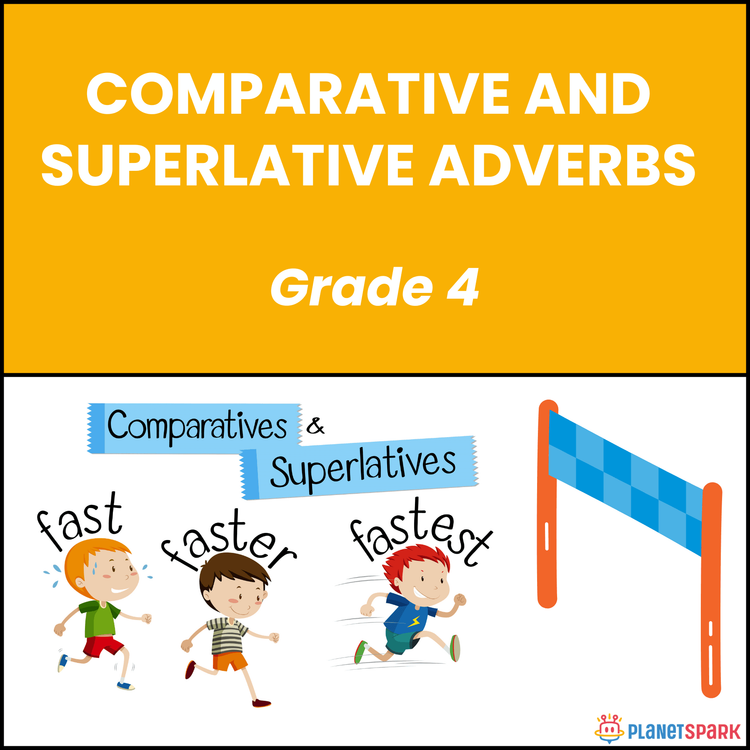
Class 4 Worksheet on Comparative Superlative Adverbs
Comparing Actions Clearly: Comparative and Superlative Adverbs for Class 4
This Grade 4 English grammar worksheet builds strong understanding of comparative and superlative adverbs—words that compare how actions are performed. Students learn how to use comparative adverbs (e.g., faster, more clearly) to compare two actions and superlative adverbs (e.g., fastest, most clearly) to compare three or more. Through structured, age-appropriate practice, learners strengthen their ability to express degrees of action accurately in sentences.
The worksheet includes multiple skill-building tasks such as multiple-choice questions, choosing between comparative–superlative pairs, matching sentences to correct adverb forms, identifying incorrect comparisons, and completing a descriptive paragraph. These activities help students understand how comparison works in action words and apply correct forms naturally essential for clear expression, strong grammar skills, and school assessments.
Why Comparative and Superlative Adverbs Matter in Grammar?
Understanding degrees of comparison in adverbs is important for Grade 4 learners because:
1. It helps students compare how actions happen in different situations.
2. It teaches correct formation using –er/–est and more/most patterns.
3. It prevents common errors like double comparison (more faster, most fastest).
4. It strengthens descriptive speaking and writing skills.
What’s Inside This Worksheet?
This worksheet includes five grammar-rich activities that build fluency with comparative and superlative adverbs:
🧠 Exercise 1 – Multiple Choice Questions
Students choose the correct comparative or superlative adverb to complete each sentence.
✏️ Exercise 2 – Choose from the Pair
Students select the correct comparative or superlative form from each given pair.
🔗 Exercise 3 – Match the Following
Students match each sentence with the appropriate comparative or superlative adverb.
🖊️ Exercise 4 – Underline the Incorrect Word
Students identify wrongly formed comparative or superlative adverbs in sentences.
📝 Exercise 5 – Paragraph Completion
Students fill blanks using suitable comparative and superlative adverbs in context.
✅ Answer Key (For Parents & Educators)
Exercise 1 – Multiple Choice Questions
1. faster
2. quickest
3. slower
4 most beautifully
5. most sweetly earlier
6 late
7. more politely
8. hardest
9. more gracefully
10. most confidently
Exercise 2 – Choose from the Pair
1. faster
2. best
3. more clearly
4. higher
5. earliest
6. most sweetly
7. more quickly
8. harder
9. more neatly
10. worst
Exercise 3 – Match the Following
1. higher
2. hardest
3. more slowly
4. most sweetly
5. more softly
6. earliest
7. more heavily
8. more neatly
9. best
10. more gracefully
Exercise 4 – Correct Forms
1. Aman was fastest in the trials.
2.This tower is taller than that one.
3.The movie was more boring than the book.
4.This bag is heavier than that one.
5.Ricky reached earlier than Akshay.
6. Aarushi danced better yesterday.
7.The train arrived late today
8.She solved the sum quicker.
9.This photo looked more beautiful than that one.
10.He finished the task fastest.
Exercise 5 – Paragraph Completion (Sample Answers)
Yesterday, we celebrated Neha’s birthday at her house. The children arrived earlier than usual, and the decorations sparkled more brightly than last year. Kavya sang more sweetly than Om, while Priya clapped most loudly of all. Rahul danced more gracefully than Harsh, but Diya laughed more happily than anyone else. The cake was served later than the snacks, and Manav ate more quickly than Ishan. Pooja cheered more loudly than the others, while Om blew the balloons fastest of all. Neha opened her gifts more eagerly than Kavya, and Harsh thanked his friends most warmly of all. Later, the children played games. Priya ran faster than Pooja, while Rahul jumped higher than Manav but Ishan finished his turn earliest of all. Finally, everyone sang the birthday song more joyfully than last year, and Neha smiled most happily of all.
Help your child confidently compare actions using correct comparative and superlative adverbs with structured Grade 4 grammar practice.
Frequently Asked Questions
Comparative adverbs compare two actions, while superlative adverbs show the highest degree among three or more.
Short adverbs add -er and -est, while longer ones use more and most before the word.
It helps children compare actions clearly and enhances descriptive sentence writing.