
Class 7 English Worksheet on Author’s Choices

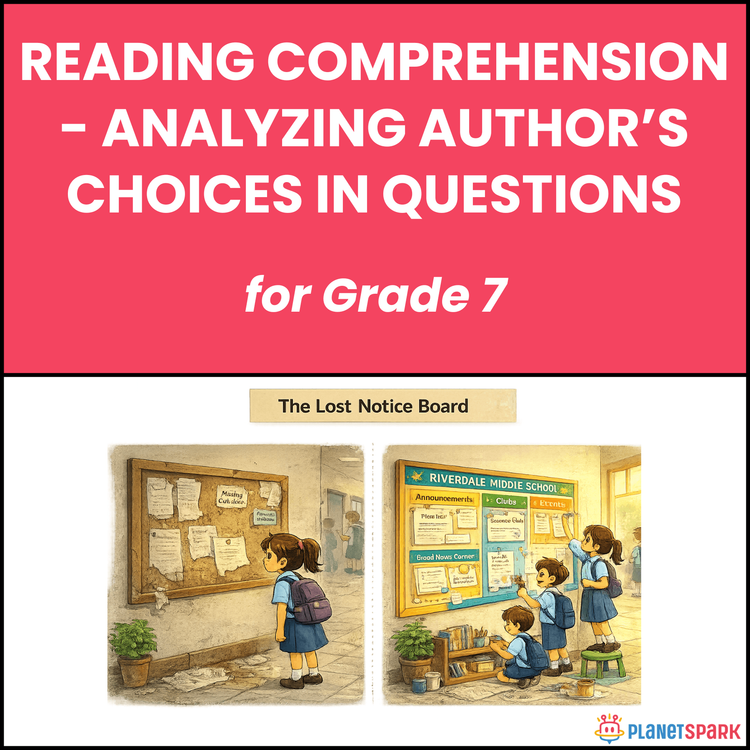
Class 7 English Worksheet on Author’s Choices
Master Author’s Choices in Reading: Grade 7 Reading Comprehension Worksheet
This Grade 7 worksheet is designed to help students develop strong reading comprehension skills by analyzing why an author chooses certain words, descriptions, symbols, and endings in a passage. With a variety of engaging exercises, this worksheet provides essential practice for young learners.
In this worksheet, students will focus on understanding how authors create meaning through word choice, tone, setting, and structure, with activities such as:
✔️ Multiple choice questions to identify the purpose behind the author’s choices in the story.
✔️ Fill-in-the-blank exercises using important words from the passage.
✔️ True/False statements to test understanding of literary choices and their effects.
✔️ Short-answer questions to explain how descriptions and symbols improve the story.
✔️ Paragraph completion to strengthen analytical reading and interpretation skills.
This worksheet helps students understand how authors use personification, contrast, symbolism, and hopeful endings to create deeper meaning, improving comprehension, critical thinking, and literary analysis.
Perfect for strengthening core English reading skills in a fun, structured, and practical way!
🔹 Answer Key (for parents and educators)
Exercise 1 – Choose the Best Answer:
1. c) To attract attention.
2. b) To personify board.
3. a) To create positivity.
4. b) To show contrast later.
5. a) To add wisdom.
6. a) To create neglect image.
7. b) To show ownership.
8. a) To keep message clear.
9. c) To show positive change.
10. c) To leave inspiration.
Exercise 2 – Fill in the Blanks:
1. board
2. voice
3. colors
4. corner
5. stories
6. teacher
7. wisdom
8. change
9. labels
10. bright
Exercise 3 – True or False:
1. False
2. True
3. False
4. True
5. True
6. False
7. True
8. True
9. True
10. False
Exercise 4 – Answer Author’s Choice Questions:
1. The author describes the board first as broken to create a strong contrast with the brighter and welcoming ending later in the story.
2. “Forgotten voice” is stronger than “old board” because it gives the board human-like qualities and makes readers feel emotion and connection.
3. The author includes Dev’s Good News Corner idea to show how positive stories can improve mood and make students stop to read.
4. The grandmother’s quote improves the message by adding wisdom and showing that ordinary things become meaningful when people care enough to notice them.
5. The author chooses a school corridor as the setting because it is a common space where everyone passes, making the change more visible and meaningful.
6. Bright colors help the theme by attracting attention and symbolizing hope, positivity, and fresh beginnings.
7. The ending is written in a hopeful tone to leave readers inspired and show that small actions can create positive change.
8. Contrast improves the story by showing the difference between the old neglected board and the new welcoming notice board.
9. Small details like labels are important because they make the board organized, clear, and useful for students.
10. The best author’s choice is using “forgotten voice” because it creates strong imagery and makes the message of listening and care more powerful.
Exercise 5 – Complete the Passage:
1. board
2. board
3. colors
4. corner
5. teacher
6. change
7. wisdom
8. labels
9. bright
10. change
Help your child strengthen literary analysis skills and build confidence in understanding author’s purpose and writing choices.
Book a free trial!
Frequently Asked Questions
They help students understand why writers choose certain words, details, and sentence styles to shape meaning and reader response.
It builds deeper literary understanding by showing how writing decisions influence tone, mood, and message in reading passages.
They can ask why a writer used specific words or examples and how those choices change the feeling of the text.